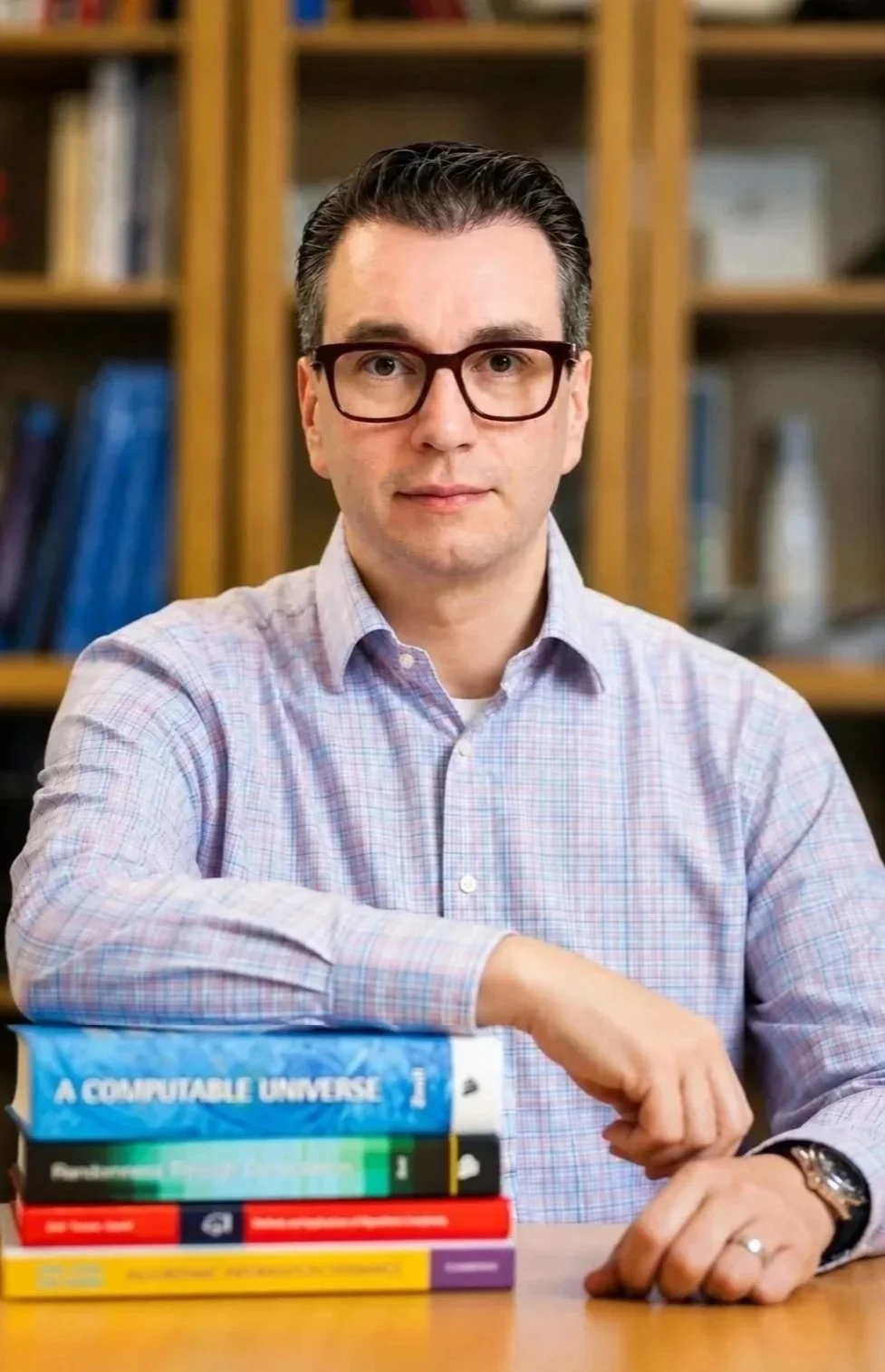
Dr Hector Zenil FRSM
PhD Computer Science (Lille I), PhD Logic and Epistemology (ENS/Sorbonne Paris I), PGCert (Oxford)
Fellow of the Royal Society of Medicine
Founder & CEO
Associate Professor in Healthcare and Biomedical Engineering
Module co-leader: Critical Skills for Translational Healthcare Technologies
(MEng and MSc / MedAI, Imaging, Robotics & Neurotech tracks)
Research Departments of Biomedical Computing & Digital Twins
School of Biomedical Engineering & Imaging Sciences
Faculty of Life Sciences & Medicine / King's Institute for Artificial Intelligence
King's Health Partners AHSC (NHS–KCL)
King's College London
Research Associate Member @ Cancer Research Group
The Francis Crick Institute
Former affiliations
BridgeAI and Defence & National Security Group
The Alan Turing Institute
Machine Learning Group, Department of Chemical Engineering and Biotechnology
University of Cambridge
Structural Biology Group, Department of Computer Science
University of Oxford
Unit of Computational Medicine, SciLifeLab & Center of Molecular Medicine
Karolinska Institute
Opening Keynote at ALIFE 2025, Kyoto Japan
Latest Published Books


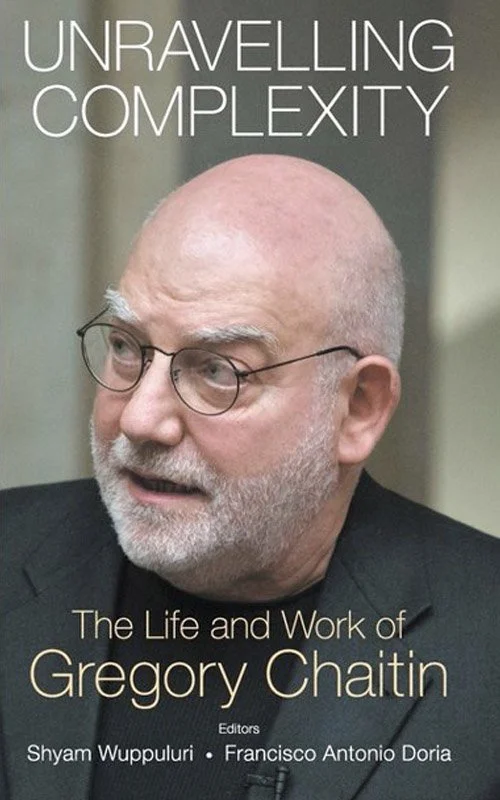
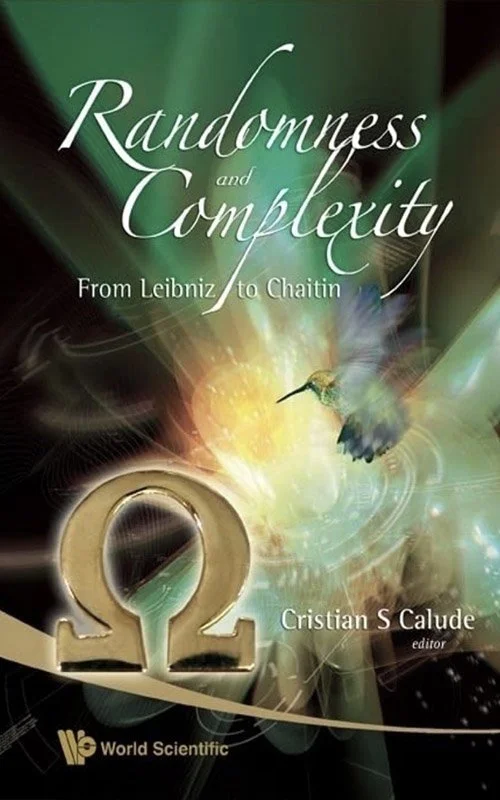
World Scientific Press / Imperial College (2012) with a foreword by Sir Roger Penrose, Springer Nature (2022), and Cambridge University Press (2023).
Methods and Applications of Algorithmic Complexity offers an alternative approach to algorithmic complexity rooted in and motivated by the theory of algorithmic probability. It explores the relaxation of the necessary and sufficient conditions that make for the numerical applicability of algorithmic complexity better rooted in the true first principles of the theory and what distinguishes it from computable or statistical measures, including those based on (lossless) compression schemes, such as LZW and cognates, that are in truth more related to traditional Shannon entropy and demonstrably inadequate to characterising causal mechanistic principles.
The best way to describe myself is in the words of one of my mentors, Gregory Chaitin. On several occasions — including in my PhD thesis report — he referred to me as a "new kind of practical theoretician."
Chaitin is widely recognised for a discovery that Marvin Minsky — often considered the father of AI — described as the most important result in science after Gödel's incompleteness theorems.
Stephen Wolfram and I would later design the Leibniz Medallion in celebration of Chaitin's 60th anniversary, awarded to him in 2007.
In 2010, I met Konrad Zuse's son, Prof. Horst Zuse, in Berlin, and obtained permission to republish Zuse's seminal Calculating Space (Rechnender Raum) — the first work to consider the universe as a giant computing system, foundational to digital physics and the simulation hypothesis.
Prof. Adrian German of Indiana University and I completed the remastering of Zuse's work, published in my volume A Computable Universe (Imperial Press / WSPC) with a foreword by Sir Roger Penrose (Nobel Prize in Physics, 2020).

Algorithmic Information Dynamics
Algorithmic Information Dynamics (AID) is a type of digital calculus for causal discovery and analysis in software space — the result of combining perturbation and counterfactual analysis with algorithmic information theory. Watch the video below for an overview, or read the Scholarpedia page on AID for more technical details.
As Featured in Nature
Nature, the world's top journal in science, produced a video to explain our research on algorithmic probability — an AGI approach to causal discovery — following our article on causal deconvolution.
- Reddit and PLOS Science invited me to an AMA that ranked in the top-10 all-time Reddit/PLOS Science AMAs in 2018.
- Quanta produced a podcast on our research on the computational emergence of genes.
- Invited Springer Nature essay: Reprogramming Matter, Life, and Purpose.
Academic Journey
I was a visiting scholar at Carnegie Mellon and a member of the NASA Payload team for the Mars Biosatellite project at MIT.
I was also part of the original Wolfram|Alpha team — about five people, today 300+ — working directly with Stephen Wolfram on computational linguistics code that fuelled the first generation of modern chatbots and later the first plugins released by OpenAI.
I currently serve as director and advisor for several company and trust boards in healthcare in the UK, Canada, France and the UAE. I am the sole founder and CEO of Oxford Immune Algorithmics Ltd, trading as Algocyte — a spin-out from King's College London, further developed in the Cambridge ecosystem and originally incubated by Oxford. I am also a Fellow of the Royal Society of Medicine since 2021 and an elected member of the London Mathematical Society since 2015.
For more than ten years, I have been associated with the so-called Golden Triangle universities in the UK — affiliated with Oxford and Cambridge as a faculty member and senior researcher, and more recently associated with The Francis Crick Institute. Before this, I was Assistant Professor and lab leader at the Algorithmic Dynamics Lab — Unit of Computational Medicine, Centre for Molecular Medicine at the Karolinska Institute (the institution that awards the Nobel Prize in Physiology or Medicine) and SciLifeLab in Stockholm, Sweden.
As senior researcher and policy advisor at The Alan Turing Institute, the UK National Institute for Data Science and AI in London, my work was backed by the Office of Naval Research (US Department of Defense).
I introduced the field of Algorithmic Information Dynamics (AID) — a new field devoted to causality in dynamical systems, in particular living systems, in what we call "software space": the space of all possible mechanistic models, using a form of Artificial General Intelligence grounded in a general theory of optimal prediction.
Gregory Chaitin, one of the founding fathers of modern computer science and complexity theory, described me in his Ph.D. thesis committee written report as a "new kind of practical theoretician" and later commended my work in the context of an opinion of Marvin Minsky and the work of Ray Solomonoff.

A formal approach to the Semantics of SETI and techno-signature detection
For too long, scientists have made simplistic assumptions about how zero-knowledge messages could be deciphered between intelligent beings with no common language — from the Arecibo message to the Voyager discs. The same rules can help us understand immune cells with their cytokine-based grammar, and animal species capable of sophisticated social language.
Founder of the Arrival Institute
A single line of code that fools Shannon entropy

My proudest piece of code: a highly-nested recursive function written in the Wolfram Language on a train from Gothenburg to Stockholm with Dr. Narsis Kiani and published in Physical Review E.
ZK[graph_] := EdgeAdd[graph,
  Rule @@@ Distribute[
    {m + 1, Table[i, {i, m + 2, (m + 1) + (m + 1) - VertexDegree[graph, m + 1]}]},
    List]]
The single line of code shows how a super-compact fully deterministic algorithm can fool any statistical inspection including Shannon Entropy-based methods (comprising popular compression algorithms like LZW usually abused in complexity science) believing that the resulting object may be random to an uninformed observer when seeing the resulting graph evolve and having no access to the generator (or probability distribution).
The resulting evolving object is always a directed connected graph that can grow to any size with Entropy-divergent properties. Its degree sequence grow with (almost) maximal entropy rate (from which it can be fully reconstructed) but its adjacency matrix (from which it can also be fully reconstructed) grows with (almost) lowest entropy values.
Where m = Max[VertexDegree[graph]] and the graph generating code is instantiated by NestList[ZK, Graph[{1 -> 2}], n] where n is the number of iterations from 1 to infinity, and 1 -> 2 is the initial 2-node single-edge acyclic graph to begin with. The algorithm adds nodes and edges keeping the graph fully connected and growing but diverging in Shannon entropy depending on its degree sequence or adjacency matrix representation.
This is one of the foundations to understanding my research, based on the differences between the causal generating mechanisms and the generated object statistical properties. This type of confusion between the generation and generated has dominated science for centuries and is at the heart of correlation v causation in basically a single line of code that produces contradictory signals.
The most important discovery in science according to Minsky
Marvin Minsky, widely considered the founding father of Artificial Intelligence, made the following astonishing claim — describing what turns out to be exactly my own line of research — in a closing statement months before passing away:
"It seems to me that the most important discovery since Gödel was the discovery by Chaitin, Solomonoff and Kolmogorov of the concept called Algorithmic Probability… everybody should learn it… it should be possible to make practical approximations to the Chaitin, Kolmogorov, Solomonoff theory that would make better predictions than anything we have today. Everybody should learn all about that and spend the rest of their lives working on it."
Turing Centenary & Academic Service
In 2007 I was invited by the late Prof. Barry Cooper to join the first Turing Centenary Advisory Committee, alongside Dermot Turing, nephew of Alan Turing. The committee led to Alan Turing's posthumous pardon by the late Queen Elizabeth II and inspired the film The Imitation Game. I served as a representative of both my friend and mentor Stephen Wolfram and myself.
I became the 3rd Managing Editor of Complex Systems in 2017 — the first journal in the field of complexity, founded by Stephen Wolfram in 1987 — and serve as Associate Editor for journals including Theoretical Computer Science, Frontiers in AI and Complexity, and for the Springer Nature book series on Complexity.
I have been awarded grants as PI / senior researcher from the Swedish Research Council (VR), the John Templeton Foundation, the Silicon Valley Foundation and DARPA BTO, and have received awards from the Kroto Institute, the UK Department of International Trade, the Etihad AI competition (against Microsoft and Accenture), the Ibiza Tech Forum ("The Next Unicorn", 3rd prize) and the Charles François Prize from the International Academy for Systems and Cybernetic Sciences at the World Conference on Complex Systems.
I was granted French citizenship by the President of France under a policy of academic excellence in 2011, and also hold Mexican and British nationalities.
The Pervasiveness of Universal Computation
I became interested in neural networks from the standpoint of computability and complexity theories in 2003 in my early 20s, while writing my final-year memoir for my BSc in mathematics at UNAM. Today, I am helping reintroduce the theories of computability and algorithmic complexity back into AI and neural networks.
My current research helps machine and deep learning see beyond statistical patterns. By introducing algorithmic probability to AI, I help the field reincorporate abstract reasoning and causation into current trends — currently very limited in tasks requiring abstraction and logical inference. An example is our paper published in Nature Machine Intelligence, freely available with no paywall.
We have proven new cellular automata to be Turing-universal using novel methods, meaning they can run any computable function — composed from extremely simple programs (ECAs):

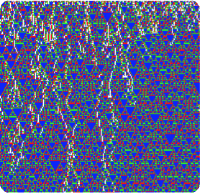

As reported in our paper published in the journal of Cellular Automata, we proved that these two 4-colour cellular automata are Turing universal, found by exploration of rule composition. This means that these CAs can, in principle, run MS Windows and any other piece of software (even if very inefficiently).
These new CAs helped us show how the Boolean composition of two and three ECA rules can emulate rule 110.
This also means that these new CAs can be decomposed into simpler rules and thus illustrates the process of causal composition and decomposition.
The methods also constitute a form of sophisticated causal coarse-graining learning that we have explored in other papers such as this one. In the same paper, we also introduced a minimal set of ECA rules that can generate all others by Boolean composition.
In this other paper, we also found strong evidence of pervasive universal computation in software space.
Other Authored and Edited Books


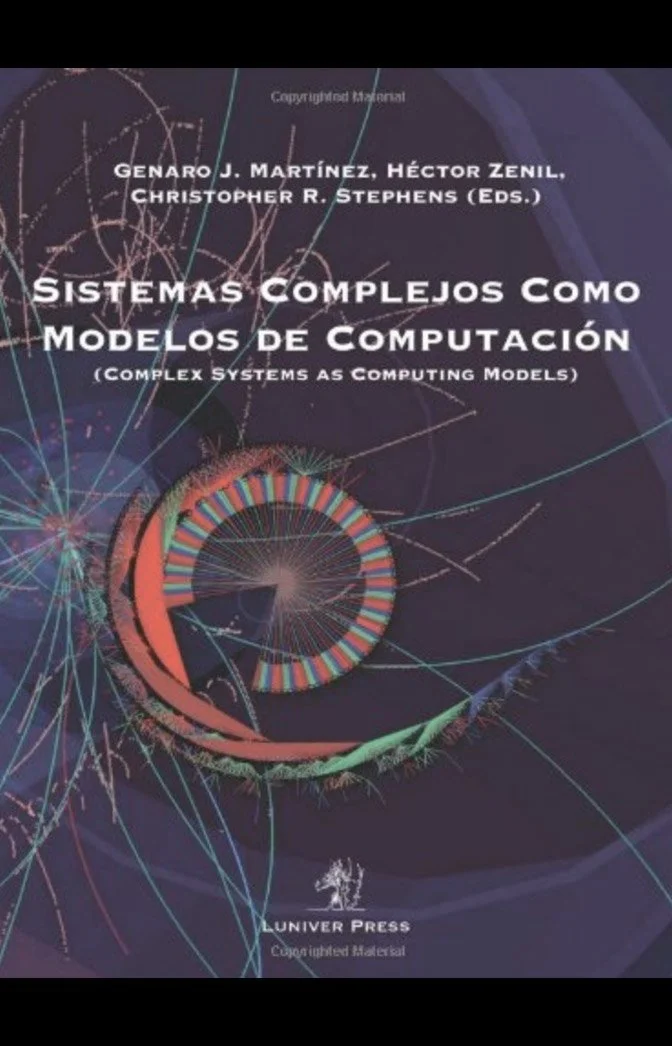

‘Lo que cabe en el espacio’ a short book I prepared right after my BSc degree, is available for Kindle and for free in mobi and pdf.
As contributor